See how Opener gives franchisors and franchisees complete visibility into every step of the opening process—streamlining communication, boosting accountability, and ensuring nothing falls through the cracks from signing to grand opening.
SaaS marketing veteran brings more than 20 years of B2B marketing experience to leading franchise management software provider
HERNDON, Va., May 10, 2022 /PRNewswire/ — FranConnect, the leading provider of franchise management solutions for driving success in franchise sales, operations, and marketing, today announced the appointment of Lorena Garcia to its executive leadership team as the Senior Vice President of Marketing. Garcia will be responsible for the entire end-to-end marketing function at FranConnect, including driving growth through innovative and scalable practices in account-based marketing, lead generation, market analysis, customer segmentation, digital marketing, and brand stewardship.
Summer is approaching and gyms everywhere are packed with those trying to prepare to show off their hard work. If you are in the health and fitness industry, according to research, you have two important things on your mind: the success of your clients and the contribution you are making to your community. But you cannot help your members OR your community if you are not properly tracking the health of your business.
We recently launched Franchise Scorecards and are excited to share the news! The franchise scorecards, part of FranConnect’s Operations platform, equip brands with a complete view of the health of a unit at your fingertips helping franchisees drive unit-level economics. Anyone involved with franchise field visits likely agrees that the prep work for a visit can be daunting. It seems to take hours, pulling information from different systems to end up with questionable economic insights. Additionally, comparing one unit against the average of their peers is nearly impossible without having key performance metrics identified.
Franchising is a proven way to scale your business by distributing the risk and the reward across a community of franchisees. Yet, most franchisors struggle with engaging their franchisees, who are often the lifeblood of their growth and success. No matter how big or small you are as a company–you can’t afford to have franchisees struggle because they don’t have enough engagement with their parent brand.
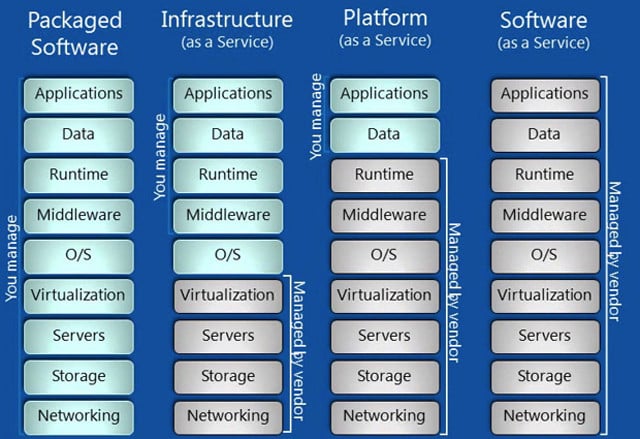
IaaS is the most basic layer; PaaS is in the middle, and SaaS sits on top.
Software as a Service: A vendor has already built the software, and you pay a monthly or annual fee to use it. The vendor handles maintenance, upgrades, and any other software-related issues. Think of it as using a passenger train. All you have to do is enjoy the service; schedules, routes, maintenance, and fees are determined by the vendor.
Common example: Google Apps
Platform as a Service: The vendor develops and deploys virtual servers, OS, applications, storage, and security, which saves you time and resources. To use the vehicle analogy, this would be like hailing a cab. The cab driver keeps the car running and takes you wherever you want to go. You must inform him of your destination and the best route to take.
Infrastructure as a Service: Instead of buying servers and expensive hardware, you can rent them from a vendor. Storage, networking, and offsite servers can then be accessed over the internet whenever you want. Think of it as leasing a car. All you have to do is fuel the car (install an OS and apps, in this case); maintenance is the vendor’s responsibility.
Common example: Google Compute Engine
History of SaaS
Here’s a brief history of how SaaS came to be:
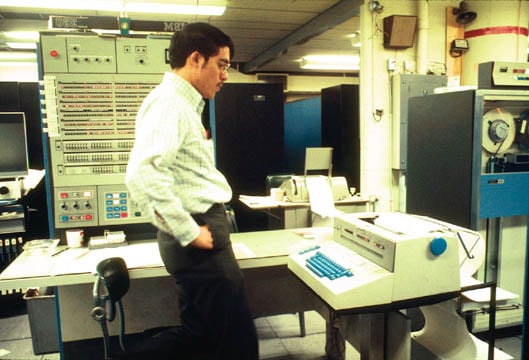
The 1960s: Computers are huge and too expensive for educational institutions or small- to medium-sized businesses. Instead of owning a computer, people rent power and space from a vendor through time sharing. Every user has a specific time-share in which they can access the computer system.
This is the IBM Model 360/67 at the University of Michigan in 1969, which allowed for timesharing.
1987: Pat Sullivan and Mike Muhney released ACT!, the first customer relationship management (CRM) software. It allows businesses to gather and store customer contacts.
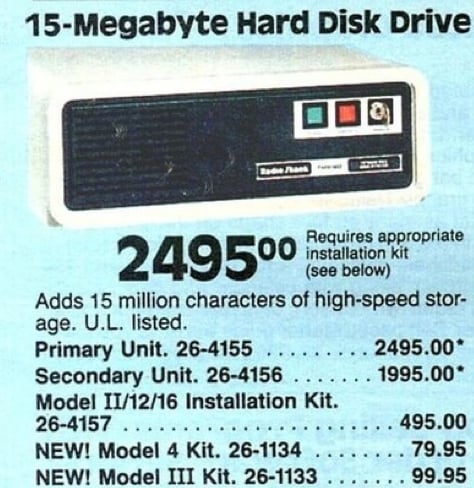
Early to mid-90s: Computers become cheaper and employees can now have computers at their desks. Applications are now stored on in-house machines. Data is stored on a central server. IT departments are staffed to manage and ensure the smooth running of this Local Area Network. Hard drive space fills up pretty fast and getting a new one like the one shown in the ad below proves too costly.
15-Megabyte Hard Disk Drive holds less than four MP3 songs today.
Late 90s: Businesses start to explore cost-effective data storage solutions as the internet becomes widely accessible. Businesses store data offsite and access it over the internet through an Application Service Provider (ASP). The client must wait for the vendor to manually input his login credentials from his end. It’s not long before ASPs are replaced by a self-service solution.
1999: Salesforce introduces multiple products and services that are delivered over the internet. They include CRM software, sales cloud, and service cloud. Businesses are attracted to this model, as they no longer have to deal with long-term contracts and licensing. A $50 monthly subscription fee is enough to enjoy the perks.
The 2000s: Concur, which previously sold packaged software in computer stores, becomes a fully SaaS company. Writing software in disks, packaging, and shipping had become too costly. Concur sells software licenses to businesses directly until 2001, when they go SaaS. As a result, Concur’s gross margins grow to 72%. Soon, Oracle and Sage start to deliver a SaaS version of their products. There’s no turning back.
History of the SaaS LMS
The history of the SaaS LMS can be traced back to 2008 when Eucalyptus software was introduced.
Eucalyptus was open-source, meaning that developers could modify the code.
As CTO, Andrew is responsible for Product Architecture, Development and Deployment at FranConnect. Andrew has 30+ years’ experience leading global teams delivering highly scalable SaaS solutions for Telecoms, Media and Payments businesses. Prior to joining FranConnect, Andrew was CTO at Arterra Mobility; he has also held leadership positions at Synchronoss and Neustar.
X
Lorena Garcia
Senior Vice President of Marketing
As SVP of Marketing, Lorena Garcia is responsible for the entire end-to-end marketing function at FranConnect, including driving growth through innovative and scalable practices in account-based marketing, lead generation, market analysis, customer segmentation, digital marketing, and brand stewardship. Previously, Lorena led go-to-market teams and demand generation at technology companies including Level Access, Hobsons, Vonage and iCore Networks.
X
Paul Sharpe
General Manager A/NZ
As the General Manager of Australia/New Zealand (ANZ), Paul is responsible for all go-to-market activities for FranConnect in ANZ, including strategy, sales, customer success and the continued growth of all FranConnect product lines in ANZ. He has held senior leadership roles at Nexon, IBM, Samsung, and NTT Ltd, with extensive experience leading sales, product, and marketing teams. t, and marketing teams. As the General Manager of Australia/New Zealand (ANZ), Paul is responsible for all go-to-market activities for FranConnect in ANZ, including strategy, sales, customer success and the continued growth of all FranConnect product lines in ANZ.
X
Stephanie Opoku
Senior Vice President of People
Stephanie oversees the global people operations across multiple countries including the US, Canada, India, Australia, and Colombia. Over the last five years, Stephanie has led the notable journey of building a solid foundation that supports our hardworking employees. She has successfully built programs that improve employee engagement and efficiency to ensure that FranConnect is a company of choice for top talent. Prior to joining FranConnect, Stephanie started and spent most of her HR career working for a leading tax publisher.
X
Vikram Raj
Senior Vice President of Products and Solutions Engineering
Vikram Raj has over 15 years of experience in franchise and multi-location management software. As the Senior Vice President of Products & Sales Engineering at FranConnect, he drives the product roadmap by combining industry insight with customer feedback to foster continuous innovation. His responsibilities include leading cross-functional teams to align product priorities with market trends, guiding clients in evaluating technical solutions, and demonstrating the measurable value FranConnect’s platform provides. During his tenure at FranConnect, Vikram has led the release of new products and offerings that increased user adoption and contributed to double-digit annual revenue growth. He emphasizes data-driven decision-making, transparent collaboration, and a strong focus on measurable results—approaches that have strengthened FranConnect’s market position and delivered sustained value to its growing global customer base.
X
Adam Walton
Chief Customer Officer
As Chief Customer Officer, Adam leads FranConnect’s customer success, professional services, and support teams, driving strategic initiatives that maximize customer value and long-term growth. With over 30 years of experience in B2B SaaS, Adam brings a cross-functional leadership approach shaped by roles across Customer, Product, Operations, and Sales.
Adam has held key executive positions at high-growth technology companies including CallMiner and most recently Cresta, where he helped scale customer experience and AI-driven solutions for enterprise clients. His leadership is grounded in a deep commitment to customer outcomes, with Net Retention as his guiding metric. Adam is passionate about building customer-first cultures and delivering innovative solutions that unlock measurable impact.
X
Charlie Zhang
Chief Financial Officer & Chief Operating Officer
As CFO & COO, Charlie Zhang plays a pivotal role in aligning FranConnect’s financial strategy with its operational execution. He is responsible for driving fiscal discipline while enabling scalable growth and innovation across the organization. Charlie’s dual leadership ensures that the company remains agile and resilient as it expands its footprint in the franchise and multi-location technology space.
Charlie brings a wealth of experience in financial strategy, corporate development, and operational leadership, with a background spanning investment banking, private equity, and technology. Prior to joining FranConnect, he served as CFO of ION Analytics, where he led global financial operations for a data and software company serving capital markets.
X
Mark Calvillo
Chief Product Officer
As Chief Product Officer, Mark Calvillo is responsible for shaping FranConnect’s product vision and translating it into a strategic roadmap that delivers measurable impact for customers. His leadership will focus on evolving the platform in alignment with market needs, driving innovation, and ensuring product excellence across the board.
Mark brings over two decades of experience in product leadership, most recently at Restaurant365. Known for his customer-first mindset and ability to turn insights into scalable solutions, Mark will guide FranConnect’s product strategy to support growth and deepen value for franchise and multi-location businesses.
X
Ayron McLochlin
Chief Revenue Officer
As Chief Revenue Officer, Ayron McLochlin leads FranConnect’s global go‑to‑market and revenue organization. He is responsible for driving new customer acquisition, accelerating customer expansion, developing new markets, and overseeing pre‑sales consulting and revenue operations to support FranConnect’s continued year‑over‑year growth.
With more than 15 years of leadership experience in enterprise software, SaaS, and technology‑enabled services—and over a decade working with Private Equity–backed companies across Vista Equity Partners, K1, and MidOcean Partners—Ayron brings a proven track record of scaling organizations ranging from $10M to $600M in revenue. Known for his ability to transform commercial teams, he specializes in building high‑performing sales, marketing, customer success, and RevOps functions that create predictable and repeatable growth
X
Ali Muskett
Chief of Staff
As Chief of Staff, Ali Muskett serves as a strategic partner to the CEO and CFO/COO, supporting critical cross-functional initiatives that advance FranConnect's key organizational priorities. She coordinates high-impact projects spanning multiple departments, ensures organizational alignment, and translates strategic vision into executable plans while maintaining accountability across initiatives.
Ali brings over five years of experience in the franchising space, having worked directly with hundreds of franchisors throughout her career. Her background includes leading high-performing sales teams and executing strategic initiatives that drive measurable results. Known for her ability to align cross-functional teams and support execution, Ali combines franchise industry expertise with strong leadership skills to help accelerate FranConnect's growth and operational excellence.
X
We've detected you might be speaking a different language. Do you want to change to:




































 EN
EN  EN_AU
EN_AU