

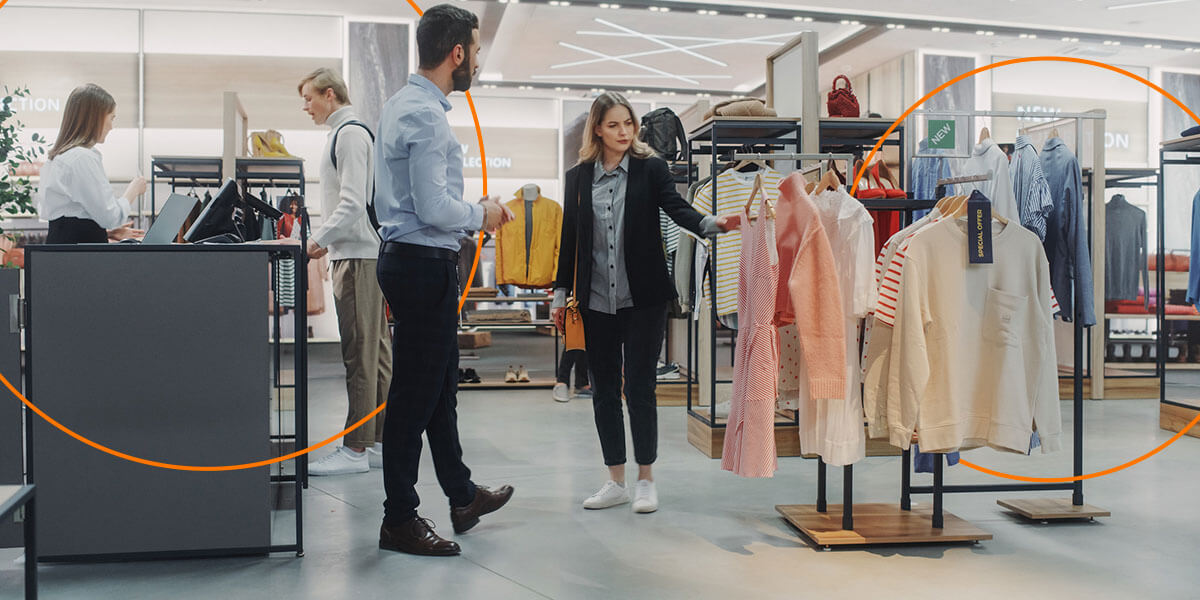
Store layout affects more than customer flow. For a multi-location or franchise brand, layout decisions also influence merchandising consistency, employee routines, inventory visibility, compliance, service speed and the ability to reproduce the same experience across locations.
The four most common retail store layouts are grid, herringbone, loop or racetrack, and free-flow. Each model creates different operational tradeoffs, and the best choice depends on product mix, space, customer behavior and how tightly the brand needs to standardize execution.
1. Grid Layout
A grid layout uses parallel aisles and predictable product zones. It is common in grocery, convenience, pharmacy, hardware and other categories with broad assortments.
- Best for: large assortments, repeat shopping missions and efficient stocking.
- Operational benefit: easier planogram standardization, inventory organization and employee training.
- Tradeoff: less flexibility for experiential merchandising and local customization.
2. Herringbone Layout
A herringbone layout uses a central aisle with shorter side aisles branching away from it. It can work well in narrow spaces where the brand needs to maximize merchandise density.
- Best for: long, narrow footprints and specialty retail.
- Operational benefit: combines structured merchandising with stronger sightlines into product zones.
- Tradeoff: congestion and visibility can become issues if high-traffic areas are not managed well.
3. Loop or Racetrack Layout
A racetrack layout guides customers along a defined circulation path around the store. Department stores and larger-format retailers often use this model to expose shoppers to more of the assortment.
- Best for: larger stores with multiple merchandise zones.
- Operational benefit: creates a consistent customer journey and clearer promotional sequencing.
- Tradeoff: customers with a single-purpose visit may need to travel farther than they would in a grid layout.
4. Free-Flow Layout
A free-flow layout gives the brand more control over how displays, fixtures and customer movement are arranged. It is common in boutiques, showrooms and concept-driven retail.
- Best for: curated assortments and experience-led concepts.
- Operational benefit: flexible merchandising and stronger opportunities to feature priority products.
- Tradeoff: harder to standardize if every location improvises the floor plan differently.
Standardization Matters More as the Network Grows
For one store, a layout change can be managed informally. Across dozens or hundreds of locations, the same change becomes a rollout program involving design standards, fixture requirements, training, inventory moves, deadlines and verification.
Multi-location brands should define which layout elements are mandatory, which can vary by footprint and who approves local exceptions.
Connect Store Layout to Merchandising Standards
A documented layout is only useful if locations execute it consistently. Planograms, promotional zones, signage, product placement and customer-flow expectations should be translated into clear operating standards that field teams can verify.
Brand Consistency workflows can help multi-location teams turn store standards into repeatable field execution and corrective action.
Train Teams Before Layout Changes Go Live
New fixtures, product zones or customer-flow patterns change how employees stock, clean, sell and serve. Training should be part of the rollout plan rather than an afterthought.
Role-based learning can help managers and frontline employees understand the new standard before the change reaches customers.
Measure Whether the Layout Is Actually Better
A new store layout should be evaluated with operational and commercial signals, not aesthetics alone:
- Sales by category or zone
- Conversion and basket size
- Customer traffic patterns
- Stocking and replenishment time
- Compliance with merchandising standards
- Location-to-location execution variance
Treat Store Design as an Operating Standard
The right layout depends on the brand, assortment and customer journey. For multi-location operators, the bigger challenge is making sure the chosen model can be documented, trained, rolled out and measured consistently across the network.
FranConnect helps multi-location and franchise brands connect standards, field execution, training and performance data so changes designed at headquarters can be implemented consistently at the location level.