














By

Kelsey Smith
Quality Management Feature Image

How Quality Management Software Enhances Business Operations

When a single location underperforms, the entire brand feels the impact. Missed safety protocols. Inconsistent service. Negative reviews that spread faster than resolutions. For multi-location businesses, operational missteps aren’t isolated—they’re contagious. And the bigger the network, the harder it becomes to see issues before they escalate. Quality management software helps solve this by providing real-time visibility across all locations, allowing businesses to identify and address issues early, before they affect the entire brand. With automated tracking and standardized processes, businesses can maintain consistency and compliance, no matter how widespread their network.

The pressure to maintain consistent performance across dozens—or hundreds—of sites can overwhelm even the most experienced teams. Reactive decisions become the norm, checklists pile up, and leaders are left wondering what went wrong. Quality management software flips that script. By replacing guesswork with real-time oversight and standardized processes, it brings control back to the frontlines. What once felt chaotic becomes coordinated. What was once hidden becomes visible. And with that transformation comes the power to scale with confidence.

What is a Quality Management System?

A Quality management system (QMS) is a structured framework of policies, processes, and procedures designed to ensure that an organization consistently delivers products or services that meet customer and regulatory requirements. It focuses on enhancing customer satisfaction through continuous improvement and operational efficiency.

Key elements of a QMS typically include:

  • Quality policy and objectives
  • Documented processes and procedures
  • Roles and responsibilities
  • Performance measurement and monitoring
  • Internal audits and corrective actions
  • Continuous improvement practices

Popular standards like ISO 9001 provide guidelines for setting up and maintaining an effective QMS. Organizations use QMS to improve consistency, reduce errors, boost efficiency, and build trust with customers and stakeholders.

Why is a Quality Management System Required for Multi-Location Brands

Managing quality across a growing network of franchise or company-owned locations isn’t just difficult—it’s high-stakes. Spreadsheets break. Emails get buried. And without real-time insight, minor issues snowball into major liabilities. From missed inspections to inconsistent brand execution, these gaps can quietly erode customer trust and operational performance.

That’s why a quality management system is required, without it, businesses risk inconsistency, non-compliance, and operational inefficiencies that can damage both reputation and revenue. A QMS provides the necessary structure to ensure that every location meets the same high standards, no matter how fast the brand grows.

Quality management is important because it protects brand integrity, supports regulatory compliance, and promotes a culture of accountability. It ensures that every customer experience—whether it’s the first visit or the fiftieth—is consistently excellent.

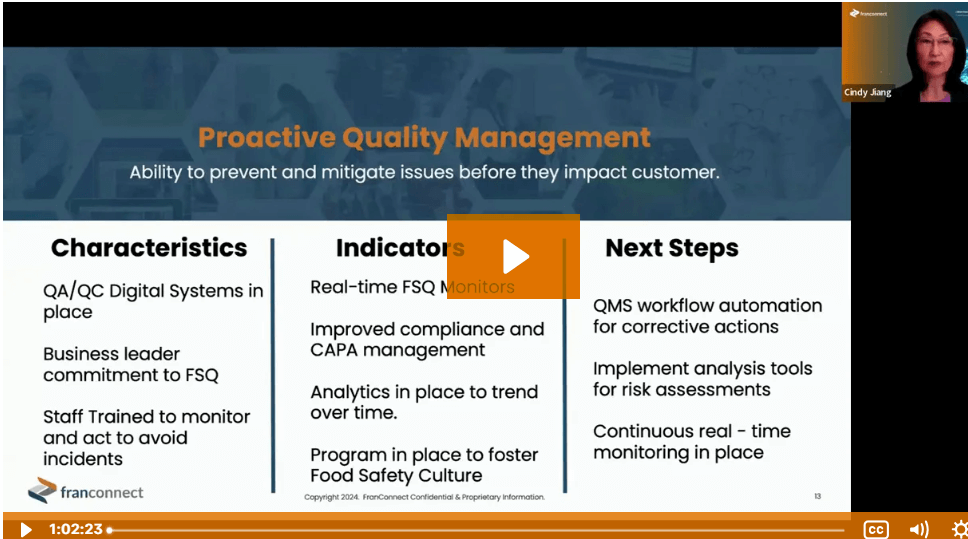
Quality management software cuts through that complexity. It eliminates manual guesswork and gives businesses the power to enforce standards with precision. With live dashboards, automated checklists, and instant issue tracking, every location stays audit-ready, compliant, and aligned. Whether it’s food safety protocols, regulatory requirements, or brand consistency, this technology ensures that nothing slips through the cracks—and that every site performs like your best one.

But the real value lies in what happens next: when consistency becomes scalable, and insight fuels every decision across your organization. Here’s how quality management tools drive measurable improvements in daily operations.

Boosting Compliance and Inspection Readiness

Compliance failures can lead to heavy fines, reputational damage, or even shutdowns. Many operators rely on outdated methods like paper checklists and inconsistent reporting to meet regulatory requirements. These systems are error-prone and offer no proactive alerts.

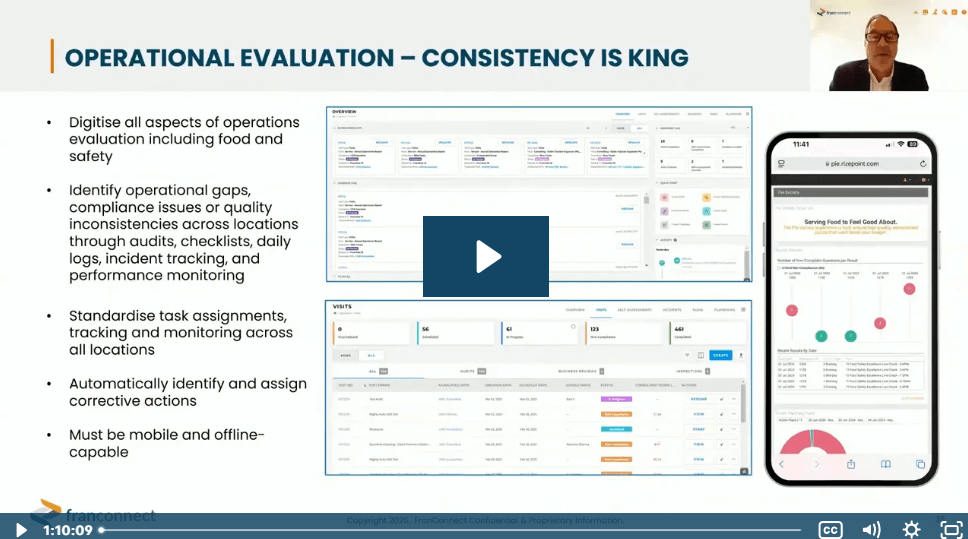
Enterprise quality management software solves this by digitizing and standardizing compliance processes. With automated workflows, customizable inspection templates, and mobile audit tools, teams can conduct thorough evaluations across all locations. Real-time dashboards flag non-compliance issues instantly allowing quick corrective action before problems escalate.

Furthermore, built-in audit trails and documented accountability ensure regulatory readiness at all times, eliminating the last-minute scramble. Quality management software enhances this by providing real-time tracking of every action and decision, ensuring that all processes are fully documented and easily accessible for audits. With automated record-keeping and seamless data integration, businesses can stay ahead of compliance requirements, reduce errors, and ensure that they are always prepared for inspections, audits, and regulatory reviews.

Enabling Consistent Operational Execution

Inconsistent execution of brand standards damages customer trust and reduces profitability. One underperforming location can drag down the brand experience across the entire network. Without centralized oversight, it’s hard to know where breakdowns occur.

Best quality management software provides centralized control over all standard operating procedures (SOPs). Operations leaders can push consistent guidelines, training, and expectations to every site. Digital task management ensures nothing falls through the cracks—especially during busy periods or staff turnover.

Performance can also be measured in real time. If a location falls short on execution, regional managers are alerted immediately. This creates a culture of accountability and excellence throughout the network.

Driving Performance with Data-Driven Insights

Without clear data, most decisions are based on gut feeling or fragmented reports. Leaders often lack a single source of truth across multiple systems, which causes inefficiencies and missed opportunities.

With quality system management software, businesses gain full operational visibility. All activities—from audits to issue resolution—are captured and analyzed in a central dashboard. Advanced reporting uncovers trends, recurring issues, and areas of strength.

For example, if multiple units fail food safety checks on the same procedure, operations can address the root cause with targeted training or updated processes. This kind of insight turns data into action, transforming decision-making from reactive to strategic.

Enhancing Cross-Functional Collaboration

Operational quality isn’t just an operations issue—it impacts HR, finance, training, and executive strategy. Siloed tools create communication gaps that slow down action and create confusion.

Modern quality management software unites cross-functional teams through shared visibility and collaboration tools. Alerts, tasks, and performance metrics are accessible across departments, so everyone works from the same data set.

For example, HR can align performance improvement plans with operational compliance data. Finance teams can link royalties to inspection scores. Executives can track macro trends affecting brand performance.

This alignment accelerates execution and minimizes errors caused by information silos.

Accelerating New Location Success

Opening new locations is often riddled with delays and inconsistencies. From health inspections to staff training, teams juggle multiple checklists with no centralized process or performance tracking.

Software for quality management system simplifies this. Pre-built templates and launch checklists standardize the onboarding process for every new site. Field teams can monitor each step, from pre-opening audits to grand opening compliance.

This ensures that every new unit meets brand standards from day one—reducing ramp-up time and setting up long-term success.

Automating Issue Resolution and Preventive Action

Manual issue tracking often ends with problems being logged but not resolved. Even worse, recurring problems are rarely addressed at the root cause level. This creates a cycle of repeated failures.

With integrated issue resolution tools, quality management software turns every problem into a tracked workflow. Corrective actions are assigned, deadlines are enforced, and documentation is automatically captured.

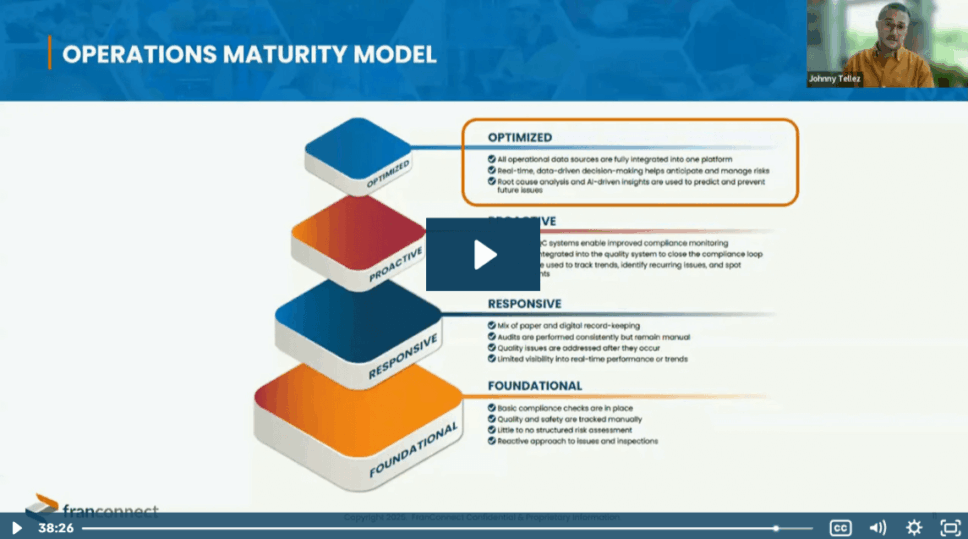
Quality management software also supports preventive actions. By analyzing issue trends, businesses can implement proactive changes that stop problems before they occur—saving time, resources, and reputation.

Increasing Brand Loyalty and Customer Trust

Every customer expects a consistent, high-quality experience—no matter which location they visit. Operational missteps like cleanliness issues, product inconsistencies, or long wait times can erode trust fast.

Software for quality management helps protect that trust. By enforcing consistent operational standards and providing performance visibility, brands ensure every location delivers on the customer promise.

Digital checklists, photo documentation, and audit results prove that expectations are being met. This not only strengthens customer satisfaction but also builds internal confidence across teams.

Supporting Scalable Growth

As brands scale, so do operational complexities. Without a structured system, growth often leads to diluted standards and increased risks. Expanding teams struggle to manage growing location counts while keeping quality intact.

Quality management software supports scalable growth through repeatable processes and centralized oversight. Whether managing 25 or 500 locations, the platform adjusts to your business size.

Growing brands benefit from automated location onboarding, standardized SOPs, and real-time reporting. Enterprise-level brands gain advanced tools like AI-driven insights, predictive analytics, and configurable compliance frameworks.

Improving Field Team Efficiency

Field teams play a critical role in ensuring quality across locations. However, without digital tools, their efforts are limited by time-consuming paperwork and manual follow-ups.

Modern quality management software empowers field teams with mobile-first tools. From the field, they can conduct audits, log issues, assign corrective actions, and track performance—all in real time.

Instead of chasing paper trails, they focus on coaching and improvements. Centralized access to data allows them to provide actionable feedback instantly, driving better results during every site visit.

Tailored to Every Stage of Brand Maturity

Whether you’re managing 10 locations or 500, your needs change as you grow. Quality management software adapts to these shifts with features suited to every stage of brand maturity.

  • Emerging brands (1–25 locations): Focus on building consistency and visibility.
  • Growing brands (26–75): Need automation to reduce scaling friction.
  • Mid-market (76–300): Demand stronger compliance and data tools.
  • Enterprise (300+): Require complex configuration, predictive insights, and long-term optimization.

No matter the size, the software supports operational excellence across all levels.

Transform Compliance and Boost Operational Efficiency

Manual processes are no longer enough to keep up with the demands of a fast-paced, multi-location business. Gaps in compliance, inconsistent performance, and a lack of real-time data can cripple growth and tarnish your brand. Quality management system software eliminates these challenges by providing tools to streamline operations, ensure consistent quality, and maintain compliance across all locations. Leading brands have already recognized that staying ahead requires more than just effort, it requires the right technology.

FranConnect’s quality management software empowers your team to work smarter, not harder. With centralized oversight, instant insights, and automated workflows, you gain the control, clarity, and consistency that scale demands. Your staff operates with confidence, your managers stay ahead of issues, and your leadership makes proactive, data-driven decisions every time. From mobile audits and digital checklists to real-time analytics, every feature is designed to ensure that standards aren’t just met—they’re exceeded.

Now is the time to eliminate fragmented systems and adopt a platform that drives operational performance, reduces risk, and unlocks scalable growth. With Quality management software from FranConnect, the tools to achieve operational excellence and consistent quality are at your fingertips.

Take the next step. Empower your brand to reach its full potential—make FranConnect your partner in quality management and watch your business soar. 

A young businesswoman analyzes a graph closely

From Spreadsheets to Success: Why Manual Franchise Management Is Costing You Growth

It’s 7:30 AM, and Sarah, the operations director of a 13-location sandwich franchise, is already drowning in spreadsheets. Three franchisees have emailed overnight about royalty calculation discrepancies. Her field operations manager can’t locate last quarter’s compliance reports for an upcoming audit. Meanwhile, the CEO wants updated growth projections by noon. 

As Sarah toggles between 16 open Excel files, a notification pops up — another location opening is delayed again because onboarding paperwork is incomplete. The ROI conversation around franchise management software she’s been putting off with leadership suddenly feels urgent.

It’s a familiar story playing out daily across growing franchise networks. Manual processes that worked for 2-3 locations become serious bottlenecks at 5, 10, 25, 50, or 75 locations.

The question isn’t whether you can continue operating with your current manual systems. The real question is how much invisible growth you’re sacrificing by doing so. Let’s explore the hidden costs of spreadsheet dependency in franchise management and reveal why the journey from fragmented processes to streamlined operations is the key to unlocking your brand’s full potential.

The Hidden Costs of Spreadsheet Management for Growing Franchises

When franchise operations rely on spreadsheets and manual processes, they incur costs that extend far beyond the obvious. The franchise spreadsheet problems that plague growing brands create a cascading effect of inefficiencies that silently erode profitability and stifle expansion.

First, there’s the sheer time investment. Operations directors like Sarah spend significant hours each week just gathering, formatting, and reconciling data from multiple sources, time that could be dedicated to strategic growth initiatives. As your franchise expands beyond 5 locations, this administrative burden grows exponentially, often requiring additional headcount that directly impacts your bottom line.

Then comes the error factor. Spreadsheets are notoriously error-prone, and in franchise management, these mistakes translate to real business consequences. Miscalculated royalties strain franchisee relationships. Overlooked compliance issues create legal vulnerabilities. Inaccurate inventory forecasts lead to stockouts or waste. Each error compounds, creating friction that slows your growth trajectory.

Perhaps most concerning are the opportunity costs, the invisible growth barriers you might not even recognize:

  • Delayed decision-making: When data lives in disconnected systems, gathering insights takes days instead of minutes, causing missed opportunities.
  • Franchise development bottlenecks: Manual onboarding processes extend opening timelines by weeks or months.
  • Relationship damage: Administrative errors and delays frustrate franchisees, damaging the trust essential for system-wide growth.
  • Competitive disadvantage: While you’re wrestling with spreadsheets, competitors with streamlined operations are expanding faster.

The real cost isn’t just what you’re spending on inefficient processes. It’s the growth you’re leaving on the table by not investing in purpose-built franchise management solutions.

How Manual Franchise Operations Impact Your Bottom Line

Manual franchise operations directly undermine your financial performance in measurable ways. When managing spreadsheets and disconnected systems, your brand suffers across multiple dimensions. 

The warning signs that manual operations are limiting your growth include:

  • Delayed expansion: Slower location openings mean months of lost revenue potential.
  • Inconsistent execution: Compliance issues damage customer experience and brand reputation.
  • Resource drain: Teams spend time managing paperwork rather than driving growth.
  • Scaling inefficiency: Administrative overhead increases proportionally with each new location.

For growth-focused brands, the question is simple: Can you afford systems that fundamentally cap your expansion potential and profitability? The ROI of purpose-built franchise management software becomes compelling when you quantify these hidden costs.

Overcoming Common Franchise Growth Challenges Through Technology

Growing franchises face consistent operational hurdles that directly impede their expansion. Franchise management software ROI becomes immediately apparent when purpose-built technologies directly address these pain points. Rather than applying generic business software to franchise-specific challenges, dedicated solutions provide targeted capabilities for multi-location brands.

Take consistency challenges, for instance. When franchisors rely on manual processes, maintaining brand standards across locations becomes increasingly difficult. Purpose-built franchise software solves this through digital brand standards, automated audits, and real-time compliance monitoring. This ensures customers experience the same quality whether they visit location #5 or location #75.

Manual franchise operations often suffer from communication breakdowns. Field staff struggle to share critical information, franchisees miss important updates, and leadership lacks real-time visibility into location-level performance. 

An integrated platform centralizes communication, creating a single source of truth that eliminates the “I never got that memo” problem. Leadership gains real-time with dashboards that surface issues early —enabling proactive decision making before they escalate into a full-blown crisis.

Technology features that directly address growth barriers include:

  • Automated workflows that streamline location openings by eliminating manual handoffs and documentation delays
  • Centralized training that ensures consistent onboarding and ongoing skill development across the network
  • Performance analytics that uncover best practices from top-performing locations and scale them system-wide
  • Compliance management tools that automate audits, standardize reporting, and reduce both risk and administrative overhead
  • Royalty management systems that eliminate calculation errors and accelerate collection 

When applied strategically, these technologies transform operational inefficiencies into competitive advantages, enabling brands to focus on growth instead of administrative work.

From Manual to Streamlined Operations

Let’s consider a hypothetical example based on typical results seen across franchise brands. Imagine “FastServe Burgers,” a fictional 47-location quick-service restaurant franchise struggling with inconsistent operations and slow expansion. Their franchise development process relies on spreadsheets, email, and shared drives, resulting in lengthy opening timelines and frustrated franchisees.

After implementing an integrated franchise management platform, this hypothetical franchise could see transformative results — mirroring real-world results FranConnect customers achieve:

  • Location opening time decreased by 28%, accelerating revenue generation by getting new units operational much faster
  • Compliance with brand standards improved by 32%, directly enhancing customer experience and satisfaction scores
  • Field support team productivity significantly increased, allowing the same staff to support more locations without additional headcount
  • Real-time performance visibility enables leadership to identify and address underperforming locations before they fail

Perhaps most importantly, average unit economics improve up to 18% compared to pre-implementation baselines, making a strong ROI case that justifies investment in franchise management software within the first year.

Transitioning from manual franchise operations to streamlined, tech-enabled systems creates a foundation that franchises need for sustainable growth, far beyond what manual systems can support.

The Strategic Value of Purpose-Built Franchise Management Solution

Making the leap from spreadsheets to a purpose-built franchise management solution is a strategic move that accelerates growth. The hidden costs of manual operations become real roadblocks to growth as your brand expands beyond a few locations.

The  ROI of a franchise management solution is clear: 

  • 28% faster openings
  • 32% better compliance
  • 18% improved unit economics 

By eliminating spreadsheets and fixing operational inefficiencies now, your brand can seize on growth opportunities while competitors stay stuck in manual processes.

Ready to explore how purpose-built franchise management technology could transform your operations? Request a demo today.

A restaurant owner talks to the head chef during a meeting

5 Questions Every COO Should Ask About Operational Excellence

In today’s fast-paced, multi-location business landscape, operational excellence has become a key driver of sustainable growth. For Chief Operating Officers (COOs), top priorities are delivering consistent customer experiences, increasing efficiency, and scaling without compromising quality. 

But what does operational excellence really mean in practice—and how can COOs lead the way in making it a reality? 

This blog addresses five of the most frequently asked questions about operational excellence, helping COOs cut through the noise and focus on what matters most. 

  1. What’s the difference between operational excellence and operational efficiency?

These terms are often used interchangeably, but they represent different concepts. 

  • Operational efficiency is about doing things right—maximizing output while minimizing input. It focuses on reducing waste, saving time, and cutting costs. 
  • Operational excellence, on the other hand, is about doing the right things, right—consistently. It’s a strategic mindset focused on continuous improvement, value delivery, and long-term scalability. 

Example:
An efficient team might process 100 franchise applications a month. But a brand striving for operational excellence would ensure those applications are not only processed quickly, but also accurately, with clear communication, seamless onboarding, and a frictionless experience for franchisees. 

  1. What are the key principles of operational excellence?

While the approach may vary by industry, most frameworks for operational excellence share these core principles: 

  • Customer Focus – Deliver consistent value at every touchpoint 
  • Continuous Improvement – Promote an ongoing culture of innovation and iteration 
  • Process Optimization – Streamline and standardize workflows 
  • Data-Driven Decision Making – Use KPIs and performance metrics to guide improvements 
  • Leadership Alignment – Ensure leaders model and reinforce desired behaviors 

These principles work together to create a business culture that prioritizes not just performance—but sustainable success. 

Real-world tie-in:
Franchise brands that integrate audit data with guest sentiment and operational KPIs are already embodying these principles. They’re using insights to not only fix issues—but to anticipate them. 


Request A Demo

  1. What KPIs should COOs track to measure operational excellence?

Tracking the right performance indicators is critical to evaluating your progress. While every brand is unique, here are some high-impact KPIs COOs should monitor: 

  • Operational cost per unit or location 
  • Time-to-open for new units 
  • Customer satisfaction (CSAT) or Net Promoter Score (NPS) 
  • Employee productivity and engagement 
  • Compliance and audit pass rates 
  • First-time resolution or quality assurance rates 

Example:
Let’s say your goal is to reduce time-to-open by 20%. If that timeline drops from 90 days to 72, you now have a replicable process that improves brand rollout speed—and gives you a competitive edge in market expansion. 

  1. How does technology support operational excellence?

Technology is no longer a nice-to-have—it’s the engine that drives modern operational excellence. 

Here’s how it empowers COOs: 

  • Analytics platforms deliver real-time insights across locations, revealing performance trends and operational bottlenecks. 
  • Audit and compliance tools standardize checklists, track issues, and ensure accountability across the network. 
  • Training systems enable location teams to stay current on processes, protocols, and brand expectations. 

Practical example:
A brand using integrated audit tools can instantly identify which locations are underperforming and tie it back to training gaps, allowing them to deploy corrective actions at scale. 

Bonus: Automation reduces the manual burden on field teams and improves consistency—especially important for businesses operating across hundreds of units. 

  1. Is operational excellence only for large enterprises?

Not at all. Operational excellence is equally, if not more, critical for emerging and mid-sized brands. 

Why? 

  • These brands are often growing fast and need scalable systems to maintain quality. 
  • Early adoption of operational frameworks helps avoid costly inefficiencies later. 
  • It ensures that every new location or franchisee receives the same level of support, training, and oversight—regardless of size. 

Example:
An emerging franchise with 10 locations that adopts a structured approach to lead management, onboarding, and training is far more likely to scale to 50 or 100 locations successfully than one that relies on spreadsheets and ad hoc processes. 

Final Thoughts: Why COOs Must Champion Operational Excellence 

Operational excellence is a broad concept, but at its core, it’s about building a business that runs smarter, not harder. It’s not a one-time initiative—it’s a long-term mindset that prioritizes data, continuous improvement, and strategic execution. 

For COOs, the path forward is clear: 

  • Focus on the principles that drive performance 
  • Leverage the right tools and insights 
  • Align people, processes, and strategy across the organization 

By doing so, you can ensure your brand is ready to scale with confidence, adapt to change, and lead with consistency. 


Download the COO Playbook for Operational Excellence—your guide to proven strategies that help COOs drive efficiency, consistency, and sustainable growth across franchise and multi-location businesses. 

Operational Excellence Blog Header Image

The COO’s Role in Achieving Operational Excellence

Operational excellence is more than a business buzzword—it’s a strategic necessity for franchise and multi-location brands.

As the competitive landscape evolves, brands must deliver consistent customer value while optimizing resources, improving reliability, and driving growth. The chief operating officer (COO) is at the heart of this mission. 

What Is Operational Excellence?  

Operational excellence is the continuous pursuit of improved efficiency, reliability, and effectiveness across all facets of the business. While it has roots in manufacturing practices like Lean and Six Sigma—focused on reducing waste and improving quality—it has since evolved. Today, it’s a holistic framework that integrates people, processes, and technology to align operations with strategic goals. 

For franchise and multi-location businesses, this means building systems that can scale without sacrificing consistency or quality. 

Request A Demo

The Evolving Role of the Modern COO 

The role of the COO has changed dramatically over the past few years. No longer confined to managing daily operations, today’s COO is a strategic partner—driving innovation, aligning operational goals with broader business objectives, and navigating change in an increasingly complex environment. 

To succeed, modern COOs must: 

  • Understand and act on real-time data and performance insights 
  • Lead cross-functional collaboration 
  • Leverage technology to improve visibility and accountability 
  • Drive operational strategies that scale 

Their ability to translate vision into execution makes COOs indispensable in steering long-term brand success. 


Tangible Impact on Operations 

The COO’s influence is most clearly felt in the measurable improvements they drive in three core areas: 

  • Process Optimization: Identifying and eliminating inefficiencies across workflows. 
  • Resource Allocation: Ensuring the right people, tools, and capital are in place to support priorities. 
  • Team Alignment: Keeping everyone focused on the company’s strategic goals. 

These actions lead to better productivity, lower costs, and stronger customer satisfaction—creating a clear operational advantage. 


Balancing Innovation, Efficiency, and Cost 

One of the toughest challenges COOs faces is balancing innovation with operational efficiency and cost control. These priorities can often be in tension: innovation demands investment, efficiency requires structure, and cost control can stifle both. 

The solution lies in strategic prioritization. COOs must: 

  • Foster a culture of continuous improvement, encouraging small, incremental gains. 
  • Use data and KPIs to monitor progress and justify investments. 
  • Invest in technology and systems that offer both short-term ROI and long-term scalability. 

When done right, this balance becomes a growth engine rather than a constraint. 


Building a Culture of Continuous Improvement 

Operational excellence isn’t a finish line—it’s a mindset. Successful COOs embed this culture into the organization by: 

  • Empowering teams and location managers to suggest and implement improvements. 
  • Encouraging collaboration to identify inefficiencies and spark innovation. 
  • Recognizing and rewarding initiatives that produce measurable results. 

This cultural shift transforms operational excellence from a top-down initiative into a shared mission across the organization. 


Why Operational Excellence Starts with the COO 

The modern COO is no longer just an operational overseer—they’re a strategic driver of change and innovation. By fostering a culture of improvement and aligning daily execution with big-picture strategy, COOs help their brands stay competitive and agile. 

As the demands on multi-location businesses continue to grow, COOs are uniquely positioned to bridge the gap between vision and execution. Their leadership is essential to turning ideas into action and ensuring operational excellence is not just achieved—but sustained. 

Operational excellence is a broad concept, and many COOs still have questions about how to apply it effectively in today’s business environment. Understanding the difference between operational excellence and efficiency, knowing which KPIs to track, and leveraging the right technologies are all critical components. While operational excellence was once seen as a strategy for large enterprises, it’s now just as essential for emerging and mid-sized brands looking to scale with consistency and control. COOs who prioritize continuous improvement, data-driven decision-making, and aligned leadership are the ones best positioned to turn vision into sustained success. 

Ready to take your operations to the next level?
Download the COO Playbook for Operational Excellence—your guide to proven strategies for driving efficiency, consistency, and scalable growth. 

A businessman zooms into graphs on his tablet during a meeting

The Power of Unifying Data Across Disparate Systems to Provide Brand Consistency and Operational Compliance to Optimise Customer Loyalty

In an era where brand loyalty is increasingly fragile, businesses operating across multiple locations must ensure consistency in operations, compliance, and customer experience. Over 80% of Quick Service Restaurants (QSRs) have adopted digital tools, yet many struggle to harness the full potential of the data these tools generate. A unified data management approach ensures brand consistency, strengthens compliance, and enhances customer loyalty.

This white paper explores how unifying data from disparate systems through an integrated platform like FranConnect can drive operational excellence, enhance decision-making, and optimise customer retention.

The Challenge: Fragmented Data and Inconsistent Operations

QSR brands and multi-location businesses rely on a variety of digital tools for online ordering, inventory management, workforce scheduling, training, and customer feedback. However, when these tools operate in silos, data remains fragmented, leading to:

  • Inconsistent brand experience across locations
  • Compliance and regulatory risks
  • Poor decision-making due to a lack of real-time insights
  • Reduced operational efficiency and increased costs
  • Declining customer satisfaction and loyalty

Request A Demo

The Solution: A Unified Data Ecosystem

To overcome these challenges, businesses need a centralised, cloud-native platform that integrates disparate data sources and delivers a real-time, holistic view of operations.

Key Benefits of a Unified Data System:

  1. Brand Consistency Across Locations
    • Standardised training and compliance protocols ensure a uniform customer experience.
    • AI-driven operational analytics detect inconsistencies and provide actionable insights.
    • Automated task management and playbooks help maintain brand standards.
  1. Enhanced Operational Compliance
    • Digitised food safety and quality control checks reduce compliance risks.
    • Real-time tracking of corrective actions ensures compliance with industry regulations.
    • Mobile and offline capabilities enable seamless reporting from any location.
  1. Optimised Decision-Making Through AI and Analytics
    • AI-powered insights generate predictive analytics for growth forecasting.
    • Operational benchmarking enables brands to measure performance against industry standards.
    • Automated insights streamline operational execution, reducing inefficiencies.
  1. Improved Customer Experience and Loyalty
    • A consistent brand experience increases customer trust and retention.
    • Real-time feedback loops help address customer concerns promptly.
    • Integrated customer engagement tools personalise interactions and drive loyalty.

Case Study: The FranConnect Advantage

FranConnect, a leading franchise and multi-location management SaaS platform, serves over 1,500 brands across 146 countries, managing 1.3 million locations. Through its cloud-native platform, FranConnect offers a real-time, data-driven approach to operational consistency, compliance, and customer engagement. By uniting disparate systems, brands gain a single source of truth, ensuring uniform standards across all locations.

Future Trends in Digitalisation and Data Integration
  • Agentic AI for Automated Execution: AI-driven automation will streamline compliance and operational execution, reducing human error.
  • IoT Integration for Real-Time Monitoring: Unified IoT networks will provide deeper insights into supply chain and operational efficiency.
  • AI Video Analytics for Customer Flow Optimization: AI-powered video analytics will enhance customer experience by optimizing store layouts and service speed.

Conclusion: Unifying Data as a Competitive Advantage

In a highly competitive QSR and multi-location business environment, the ability to unify data across disparate systems is no longer optional—it is a necessity. Businesses that leverage integrated platforms to standardise operations, enhance compliance, and deliver a consistent brand experience will gain a competitive edge in fostering customer loyalty and operational excellence.


Written by: Nick Mecozzi, SVP of Solutions, FranConnect

Two chefs cook in a kitchen

Closing the Compliance Loop: Introducing FranConnect’s Operational Excellence Platform

Managing multiple locations comes with unique challenges. From maintaining consistent standards to tackling operations compliance issues and training lapses, running a successful multi-location business requires seamless operations and real-time visibility. That’s where FranConnect’s Operational Excellence Platform steps in— our all-in-one solution helps brands tackle these challenges head-on so executive leadership can focus on streamlining operations and enhancing collaboration to fuel and foster long-term growth.   


Why Operational Excellence Matters   

Today, 72% of customers expect a seamless, high-quality experience across all locations. Failure to meet this expectation risks losing customer loyalty and damaging your brand’s reputation. The traditional approach to managing operations and compliance issues—using fragmented tools for audits, training, and reporting—is no longer enough.   

The FranConnect Operational Excellence Platform “closes the loop” by uniting a quality management solution with audits, employee training, and analytics into one centralized, mobile-friendly solution. This helps brands streamline their processes and foster continuous improvement across all locations.  


Key Features of the Operational Excellence Platform  

Automated Workflows  

Automated workflows streamline auditing and task management by eliminating manual processes and reducing errors. With real-time tracking and monitoring, you can assign corrective actions and ensure no issue is overlooked. Gain instant insights to identify problem areas and address them before they escalate, saving time and maintaining control across all locations.  

Mobile-First Onboarding and Training  

Make training simple and engaging with bite-sized modules your team can access anytime, anywhere—whether on the go or in the breakroom. Streamline onboarding to quickly get new hires up to speed while maintaining brand standards. Plus, effortlessly track progress and stay on top of compliance certifications so your team is always prepared and aligned.  

Advanced Analytics  

Get a clear view of your operations with real-time, customizable dashboards that bring all your data together in one place. Spot trends, track key metrics, and make smarter decisions faster using advanced analytics. With AI-powered tools, you can even predict and prevent hiccups before they happen. It’s all about prioritizing your resources and staying ahead effortlessly.  

Scalable and Flexible  

The platform scales with your brand whether you manage five or five hundred locations. Centralized Standard Operating Procedures (SOPs) ensure consistency, and updates are easily accessible to maintain compliance and quality across each location. Simplify operations and keep them running smoothly as you grow.  

By integrating these powerful features, FranConnect helps reduce fragmented processes, ensuring you can focus on what matters most—your customers and business growth.  


The Benefits You Can Expect  

FranConnect doesn’t just manage compliance and training—it drives business outcomes. With this platform, you can achieve greater efficiency, reduce costs, and maintain brand integrity, regardless of how many locations you manage.  

Here’s how:  

  • Consistency Across Locations: Standardize processes and procedures to deliver the same excellent customer experience, whether in Atlanta or New York.  
  • Time and Cost Savings: Automate repetitive tasks to free up resources and reduce costs, allowing teams to focus on higher-value activities.  
  • Improved Compliance: Proactively monitor audits and training certifications to ensure you meet local and industry regulations.  
  • Team Empowerment: Equip frontline employees and location managers with tools that enhance engagement and decision-making, strengthening workplace confidence and collaboration.  

By automating processes, integrating training and analytics, and providing real-time insights, you can future proof your operations and build a more resilient brand to thrive against competitors.  


Real-World Results to Look Forward To  

FranConnect has already delivered measurable success for a range of global brands. For example:  

  • Blaze Pizza: Achieved a 10x improvement in compliance across locations through personalized training and operational updates.  
  • Peco Foods: Improved operational efficiency with real-time tracking, saving time and boosting quality assurance.  


A Game-Changer for Multi-Location Brands  

FranConnect’s Operational Excellence Platform redefines how brands approach compliance, training, and analytics. If your goal is to maintain consistent quality, streamline operations, and set your brand apart, this platform is designed for you.     

Don’t let operational inefficiencies hold you back. Schedule a demo today to discover the potential of FranConnect’s Operational Excellence Platform. Closing the compliance loop is the first step on the path to streamlined operations and business growth.  

Request A Demo

1 6 7 8 9 10 37
en_AUEN_AU
Join us May 14th at 1:00 PM ET as we present the 2025 Sales Index Report
This is default text for notification bar